French Tip Nails: Classic, Modern and How to Get Them Right
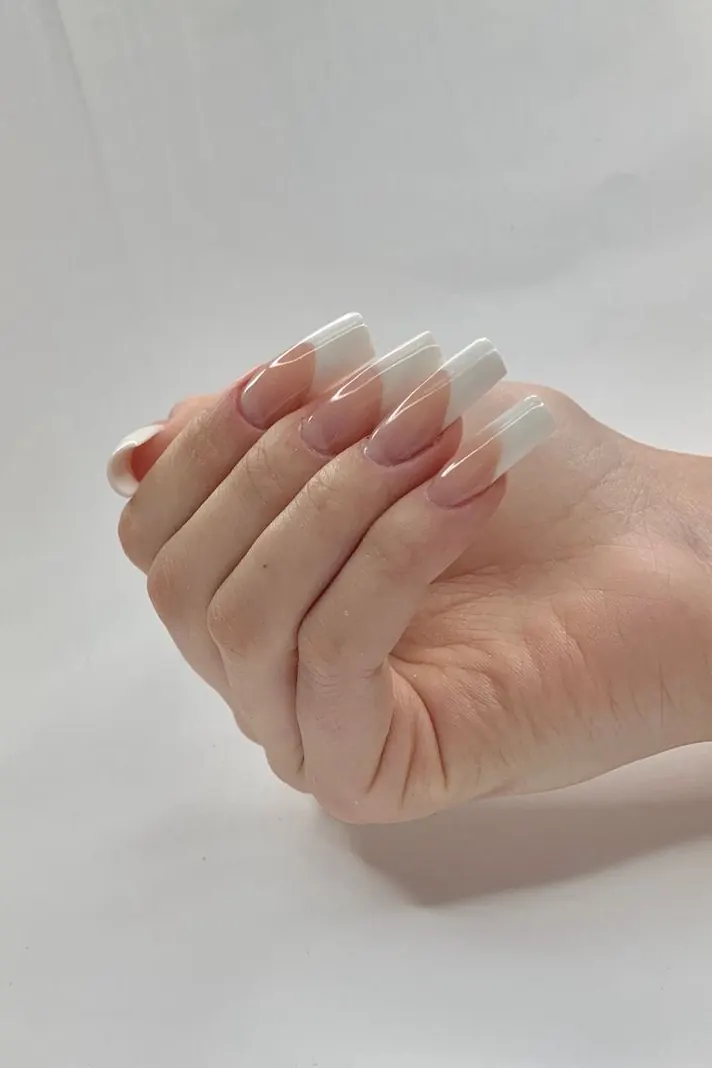
French tip nails, from the classic thin white smile line to micro, coloured and milky versions: proportions that flatter, how to get a clean line at home or in the salon, and which shapes wear the look best.
French tip nails are a pale or natural base with a white (or coloured) tip, separated by a clean smile line. They look finished without being loud, which is why they keep coming back. The details decide whether they look crisp or dated: how thick the tip is, how even the line is, and whether the base is a chalky pink or a more natural, modern shade. This guide covers classic and newer versions, the right proportions, and how to get a clean line that lasts.
What a good French tip looks like
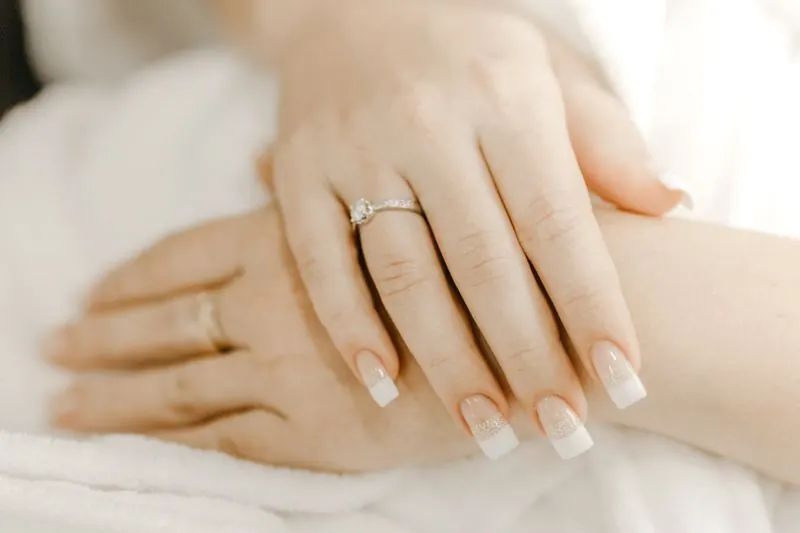
On a classic French, the tip is a thin, even band of opaque white, following the natural edge of the nail. The smile line (the curve between base and tip) should match from nail to nail and should curve with the nail, not sit as a straight stripe.
A useful starting proportion is a tip that covers about the free edge only, often 1.5 to 3 mm on a short or medium nail. Thicker white tips were fashionable in some earlier decades and can look heavy now, especially on short nails. If your nails are very short, go thinner still, or try a micro French, where the white is just a fine line along the edge.
The base should look like a healthy nail, not a mask. Sheer pink, peach, nude or a milky white usually looks more current than an opaque baby-pink under a stark white tip.
Modern ways to wear it
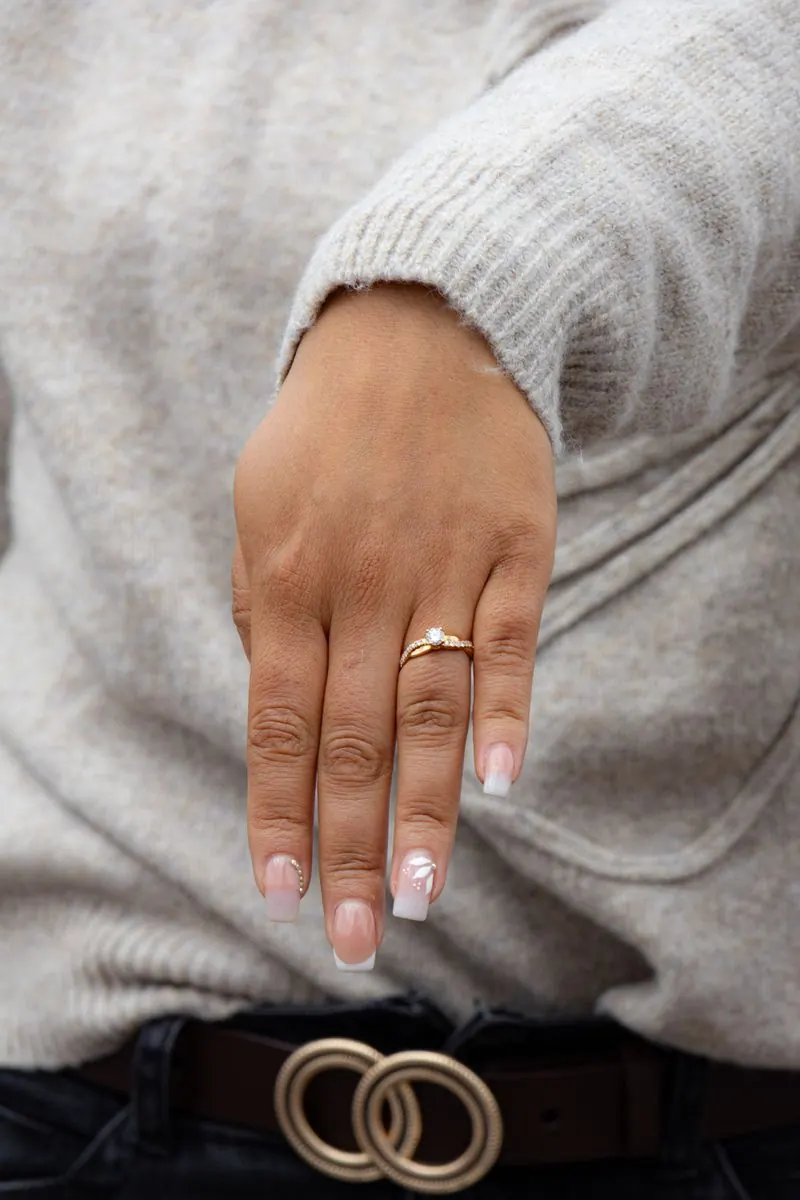
- Micro French: a very thin white or cream line. Clean and good on short nails.
- Milky French: a milky-white or sheer beige base with a softer cream tip, less contrast than the classic.
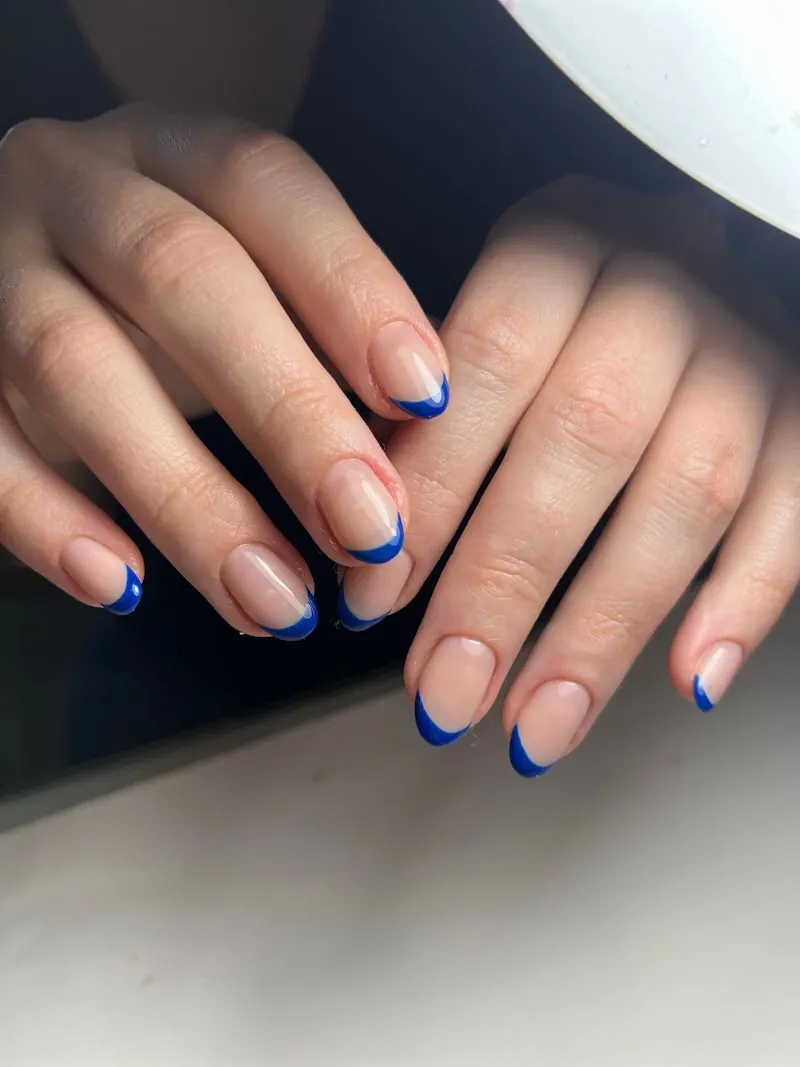
- Coloured tips: the same structure, but the tip is red, black, chocolate, sage, burgundy or chrome. The base stays nude or milky.
- Squared or squoval French: a flatter smile line on a squoval or square nail. Still keep the corners slightly rounded so they do not catch.
- Almond or oval French: the smile line should be a little deeper at the centre to follow the shape.
- Reverse or half-moon French: a contrasting moon at the cuticle rather than (or as well as) the tip.
- Negative-space French: a bare or very sheer base with only the tip painted.
You can also frost or chrome just the tip, or add a thin metallic line along the smile. Keep that as a small detail so the manicure still reads as a French.
Shape and length
French tips flatter almost every length, but the shape should help the smile line.
Short and squoval nails look neat with a micro or thin classic tip. Medium oval or almond nails take a classic or milky French especially well. Very long coffin or stiletto shapes can carry a bolder tip, but the line has to be precise or mistakes will show.
If your nail beds are short or wide, an almond or oval with a thin tip lengthens the finger more than a wide, blocky white band on a square nail. If your nails are narrow, a squoval with a slightly flatter smile line can look stronger.
How to get a clean smile line
In a salon, ask for a thin tip, show a photo of the exact contrast you want, and mention whether you prefer gel, BIAB or regular polish. Gel and builder gel usually give a sharper line and last two to three weeks. Regular polish is easier to take off but chips sooner.
At home, these methods help:
- Start with a smooth, dry base coat and a sheer nude or milky layer. Let it dry fully.
- Use French tip guides or thin striping tape just below where you want the smile line, or skip guides and use a very fine brush.
- Paint the tip with a slightly dry brush, in thin coats, following the natural edge. Two thin coats of white beat one thick one.
- Clean the smile line with a small brush dipped in a little remover before everything sets.
- Seal with a thin, even top coat, wrapped over the free edge.
For gel, cure each layer as directed and do not flood the smile line. If you are not steady freehand, a “reverse French” method (paint the tip first, or use a dip and wipe technique) is often cleaner than trying to draw a perfect curve in one stroke.
Wear, fills and removal
A French shows chips at the tip more than a full-colour manicure, because the white edge is where nails hit keyboards and keys. Wrapping the colour over the free edge and wearing gloves for cleaning will help. A mid-week swipe of top coat can tidy a regular-polish French.
For gel, book a fill when the grow-out starts to look uneven, usually at two to three weeks, rather than picking at the white band. Remove gel by soaking or having it professionally filed off, not by peeling, which takes layers of the nail with it.
Between manicures, keep the free edge slightly rounded and use a little oil on the cuticles so the pale base does not sit next to dry skin.
Get the Style Journal Co letter
One thoughtful email a week with our newest guides and seasonal ideas. No spam, unsubscribe anytime.
FAQ
How thick should French tips be?
Thin is usually more flattering: about 1.5 to 3 mm, or just the free edge. Shorter nails look better with a micro line.
What colour base is best for French tip nails?
A sheer pink, peach, nude or milky white. An opaque baby-pink base with a very thick white tip is what often looks dated.
Can you do French tips on short nails?
Yes. Use a micro or thin tip and a squoval or softly oval shape so the white band does not take up half the nail.
How long do French tip nails last?
Regular polish often lasts five to seven days; gel or builder gel can last two to three weeks with a good edge wrap and gentle wear.
Save this guide for later — this image is sized for pinning.
Some posts may contain affiliate links; see our disclosure. Photography: Roman Titov; Dulce Panebra; Marianna Hambardzumyan; Jonathan Borba; Moo Lens; Moo Lens; Salim Da; Salim Da; Salim Da; Salim Da; Salim Da; Jing Chang; Salim Da via Pexels.