Abstract Nails: Swirls, Colour Blocking, Blobs and Line Art for Every Nail Length
Abstract nails explained: freehand swirls, colour blocking, negative space, organic blobs, brushstroke and line-art designs, which tools and polishes to use, how to choose a palette, and simple abstract nail art ideas for short nails and complete beginners.
Abstract nail art is the one trend that rewards imperfection. There is no snowflake to get symmetrical, no tiny face to paint, no line that must meet another exactly. Instead, you work with shapes, colours and space, the way a painter like Matisse or Kandinsky might, and a slightly wobbly stroke can look intentional. That makes abstract nails ideal for beginners who find detailed nail art intimidating, and endlessly flexible for experienced manicurists who want to experiment. It is also a trend that has outlasted many others, because it can be pared back for the office or turned up for a party.
What counts as "abstract"
Abstract nails use non-representational design: shapes, lines and colour fields rather than pictures of objects. Common motifs include:
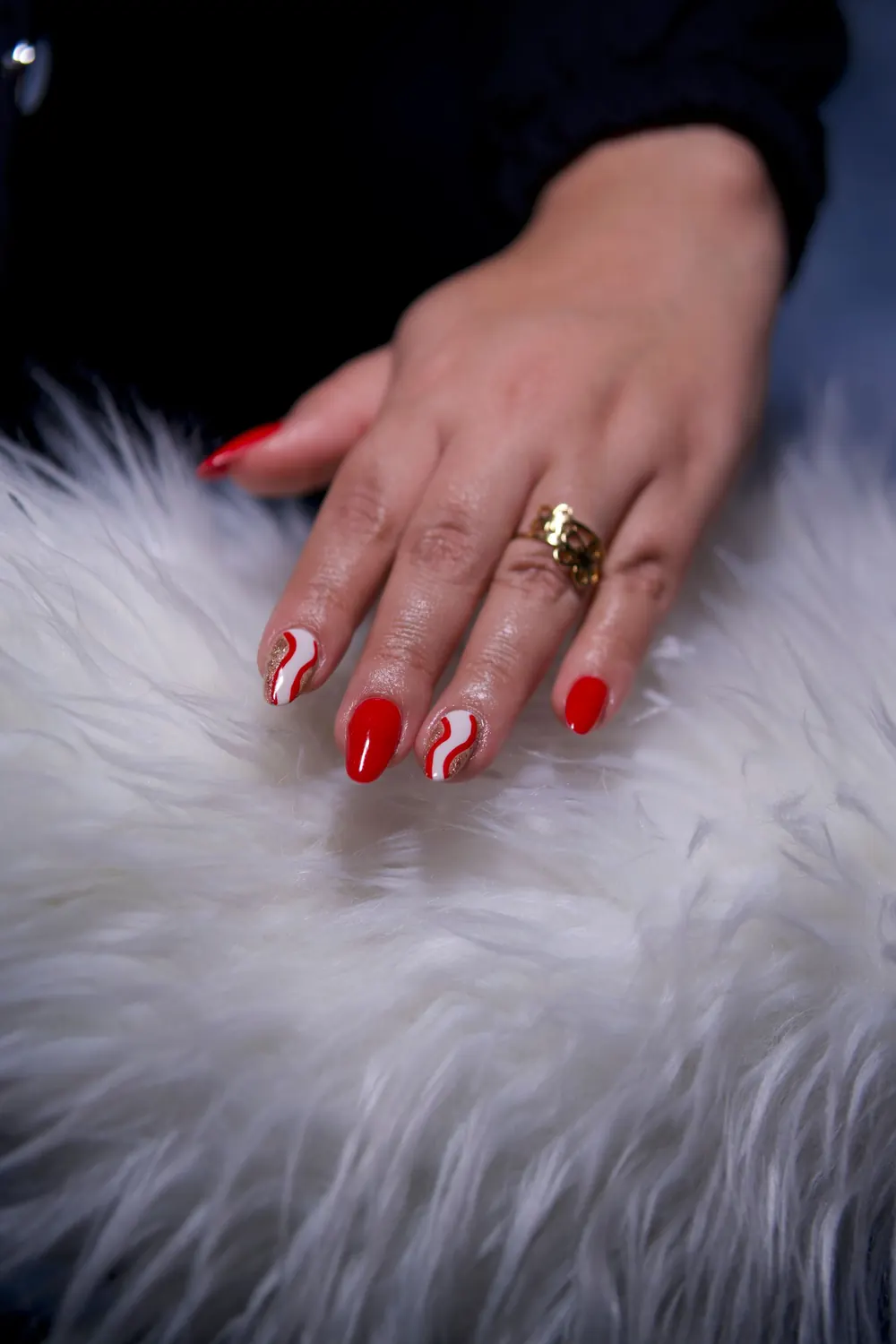
- Swirls: flowing, wavy lines in two or three colours, often on a nude or sheer base.
- Colour blocking: sections of solid colour separated by clean edges.
- Organic blobs: soft, pebble-like shapes inspired by mid-century and modern art.
- Negative space: areas of bare nail left visible between painted shapes.
- Brushstrokes: loose, painterly marks that show the texture of the brush.
- Line art: thin black or metallic lines that wander, intersect or outline shapes.
- Dots and dashes: scattered marks in a confetti-like arrangement.
Most successful sets combine two of these at most. A swirl plus negative space, or colour blocking plus a fine line, looks considered. Five techniques on one hand looks chaotic.
Choosing your palette
Colour does most of the work in abstract designs, so a little planning goes a long way.
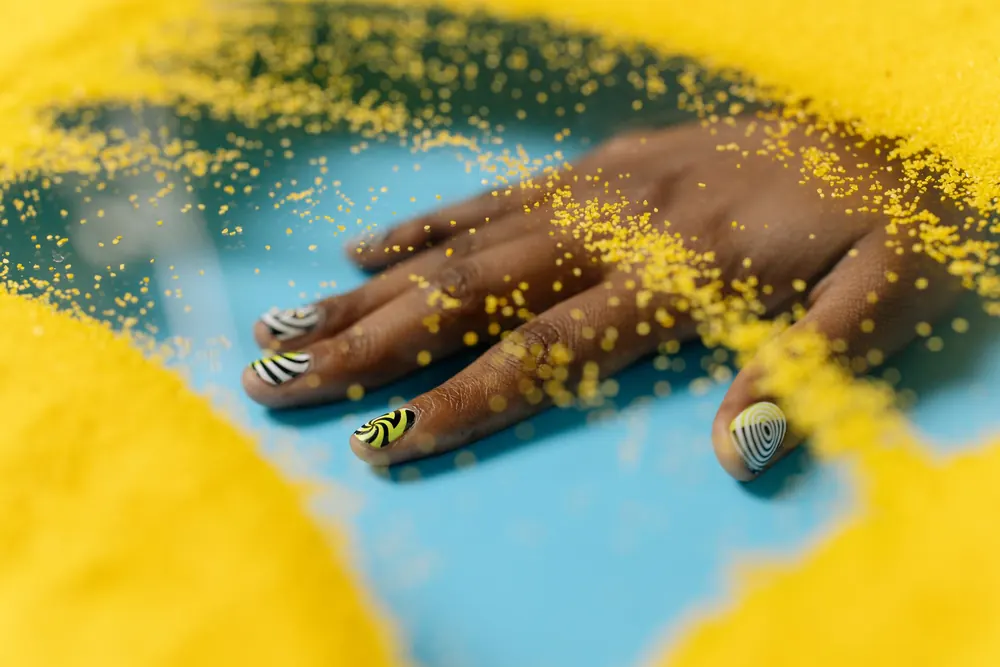
Analogous palettes use neighbouring colours, such as terracotta, rust and peach, or lilac, lavender and periwinkle. They feel harmonious and calm.
Complementary palettes pair opposites, like cobalt and orange or emerald and pink. They are bold and energetic.
Neutral palettes combine nude, cream, chocolate, black and white. They look chic and suit any outfit, which makes them a smart choice for work.
Seasonal palettes help a design feel current. For winter, try burgundy, forest green, navy and gold, or icy blue with silver and white. For spring, butter yellow, sage and baby blue.
A useful rule borrowed from interior design is 60-30-10: one dominant colour, one supporting colour and one small accent, perhaps a metallic.
Tools that make abstract art easier
- A long, thin liner brush for swirls and line art.
- A small flat or angled brush for colour blocking and clean edges.
- Dotting tools for dots and rounded blobs.
- A clean-up brush dipped in acetone.
- Highly pigmented polishes or gel paints, which give good coverage in a single thin stroke.
- A matte top coat and a glossy top coat so you can play with finishes.
Five beginner abstract designs
1. Two-colour swirl
Paint a sheer nude or milky base. Using the liner brush, draw a loose S-curve from one side of the nail to the other in the first colour, then a second curve that echoes it in another colour. Vary the thickness by pressing slightly harder in the middle of each stroke.
2. Colour-block corners
Leave the nail bare or nude, then paint a triangle or quarter-circle in one corner of each nail, changing the colour from finger to finger. Outline the edge with a thin gold line if you like.
3. Organic blob
With a dotting tool or small brush, paint one or two irregular, rounded shapes on each nail. Make each nail slightly different. Matte top coat gives this a soft, ceramic look.
4. Line-art squiggle
On a nude base, draw a single continuous black line that loops and meanders across the nail. It is minimal, modern and very forgiving.
5. Brushstroke sweep
Load a flat brush with a little paint and sweep it once across the nail diagonally, letting the bristles leave texture. Layer a second colour in a different direction.
Abstract designs for short nails
Short nails suit abstract art perfectly because you need little surface to make an impact. Keep shapes in proportion: a single small blob, a thin line or a corner block, rather than a busy pattern. Vertical strokes elongate short nails; horizontal bands make them look wider, so use those sparingly. A sheer base that shows a little natural nail also creates length.
Mixing finishes and textures
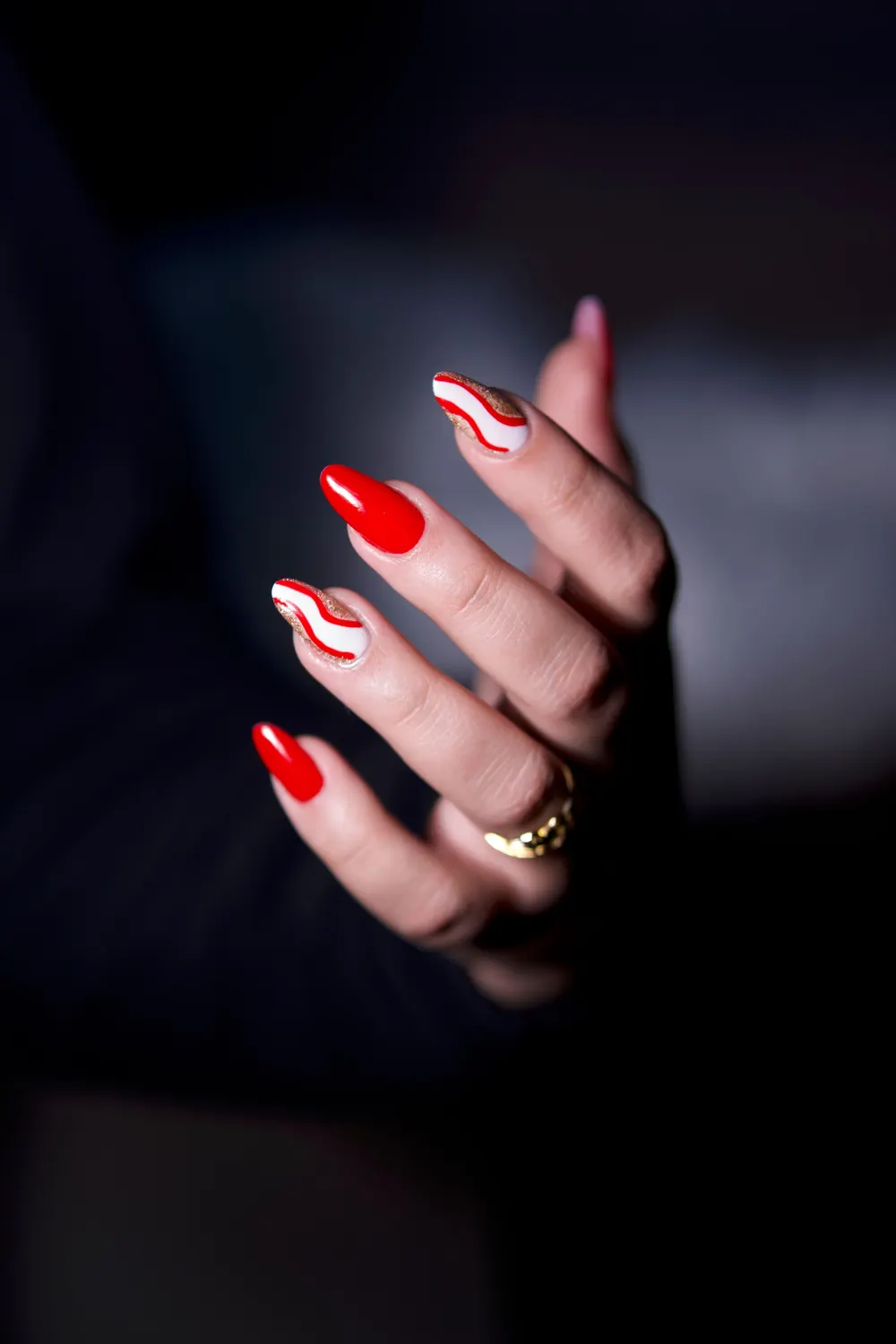
Abstract designs are a great playground for texture. Try glossy shapes on a matte base, chrome powder rubbed over one colour block, a tiny line of gold foil, or a velvet magnetic polish as one of the colour fields. Keep the rest of the design simple when you add texture, so the effect stands out.
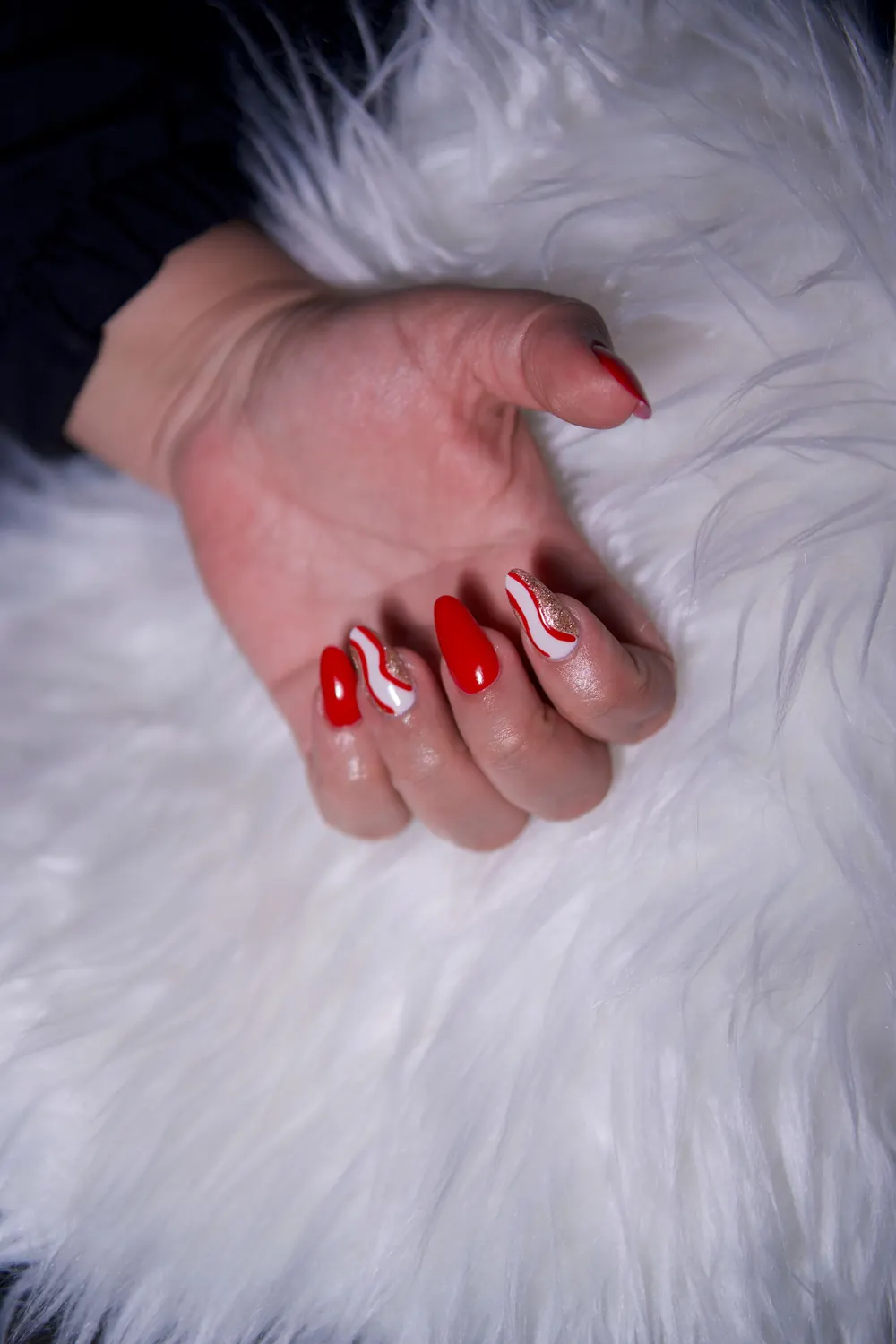
Getting a salon-quality finish at home
- Prep thoroughly: shape, push back cuticles and dehydrate the nail plate.
- Apply a thin base coat and let each layer dry, or cure gel properly.
- Work from lightest to darkest colours.
- Clean edges around the cuticle before the top coat; it is much easier.
- Float top coat over nail art without dragging, then cap the free edge to prevent chips.
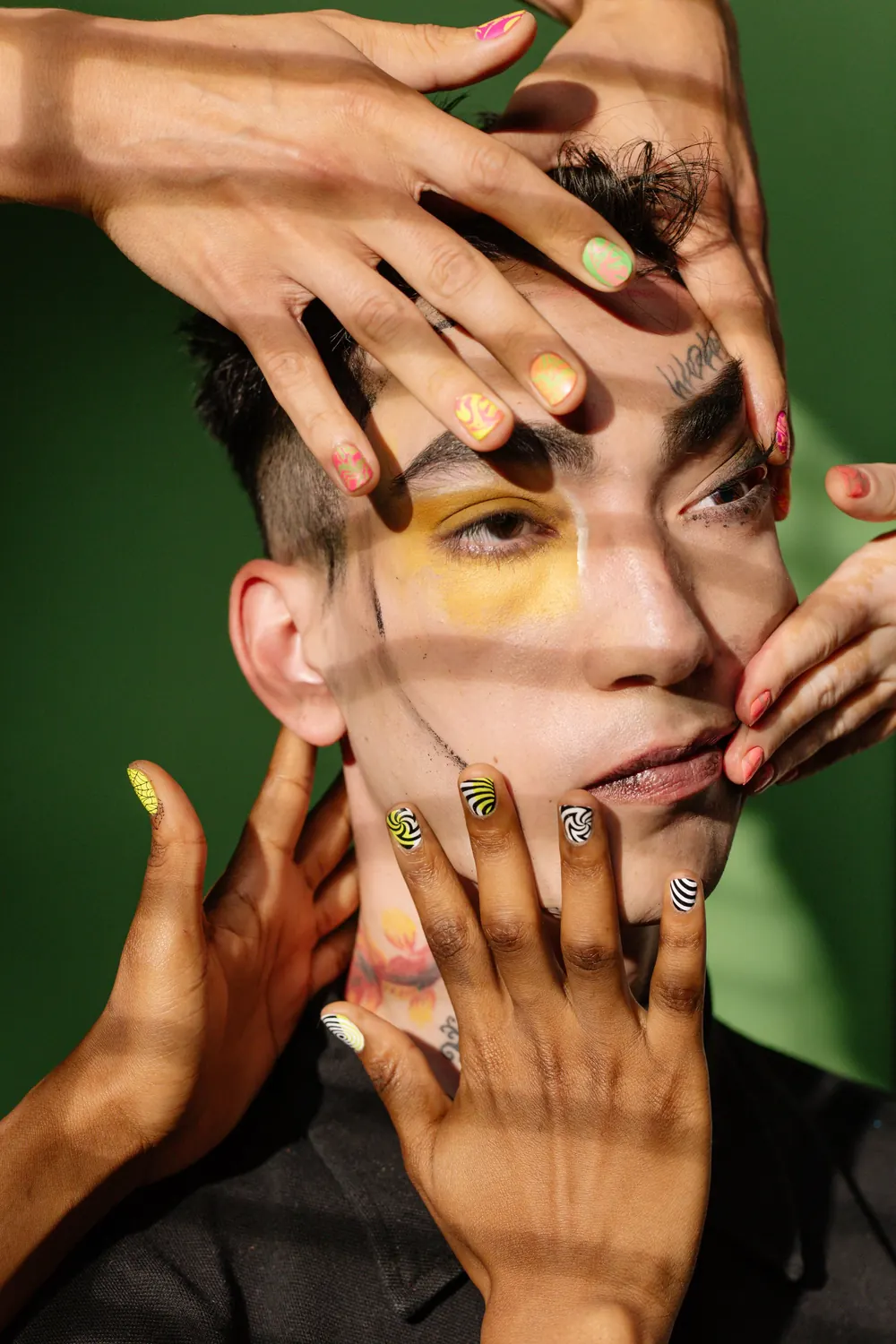
Inspiration sources
Look beyond nail feeds for ideas. Mid-century textiles, Matisse cut-outs, Bauhaus posters, marbled paper, ceramic glazes and even your own scarf or wallpaper can provide palettes and shapes. Many nail artists keep a sketchbook of shapes and test them on nail tips first.
Abstract nails, answered
Are abstract nails hard to do?
They are among the easiest nail art styles, because irregularity is part of the look. Start with one accent nail and expand from there.
Do all ten nails need to match?
No. Abstract sets often look best when each nail is slightly different but shares a palette. Repeating one colour on every nail ties the set together.
Which nail shape is best for abstract art?
Almond and oval shapes give a flowing canvas for swirls; square and squoval suit geometric colour blocking. Short round nails work well with minimal line art.
How long does an abstract manicure last?
Regular polish lasts about a week with a good top coat. Gel or builder gel lasts two to three weeks.
Abstract nails are less about following instructions and more about trusting your eye. Pick a palette you love, keep the shapes loose, and let every nail be a tiny piece of original art.
Get the Style Journal Co letter
One thoughtful email a week with our newest guides and seasonal ideas. No spam, unsubscribe anytime.
Save this guide for later — this image is sized for pinning.
Some posts may contain affiliate links; see our disclosure. Photography: cottonbro studio; cottonbro studio; cottonbro studio; cottonbro studio; cottonbro studio; Salim Da; Salim Da; cottonbro studio; cottonbro studio; cottonbro studio; cottonbro studio; Alena Chuyankova; cottonbro studio via Pexels.